
INFORMATION DISCOVERY AND THE LONG TAIL OF MOTION PICTURE CONTENT
文章链接:https://www.jstor.org/stable/26627962
作者:Anuj Kumar, Michael D. Smith, Rahul Telang
时间:Dec 2014
期刊:MISQ
总结:这篇文章建模并估计了搜索成本。通过对消费者异质性进一步分析,分析了差异化和价格因素与消费者搜索强度的关系。
个人观点:对消费者异质性下的分析很漂亮
摘要
Our data show that the pay-cable broadcast shifts the distribution of DVD sales toward long tail movies, suggesting an information spillover from the broadcast. We develop a learning-based movie discovery model to precisely quantify the two mechanisms of movie discovery: word-of-mouth from previous sales and information spillover from broadcast. We use this model to estimate the lost DVD sales due to incomplete information. Our study contributes to the literature by analyzing how information provided in one channel can change the assortment of the same products demanded in another channel.
Introduction
长尾理论指出,由于数字渠道提供了更多种类的产品,销售分布可能不会那么集中,消费者转向更多样化的产品。这种现象已经在书籍中得到证实。
但是电影中没有观测到长尾效应。目前研究对其解释包括电影质量有很强的异质性,社会效应增强回报。本文认为,产品质量的不完全信息扭曲了销售
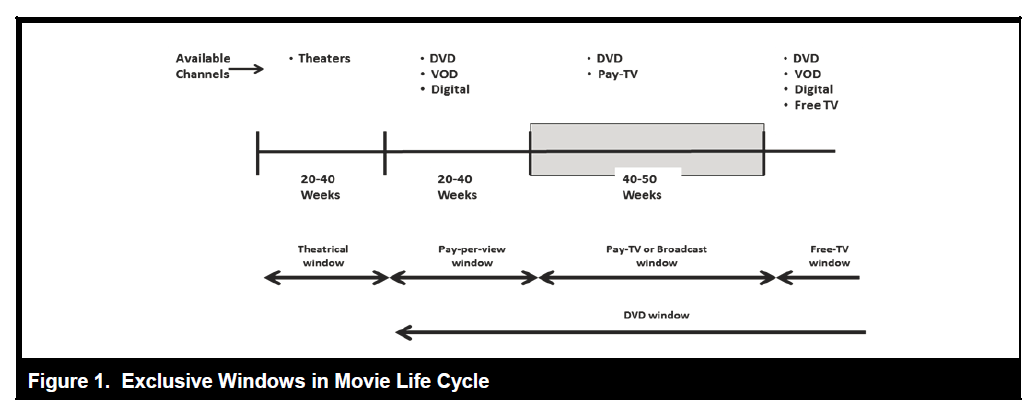
上图是电影生命周期的发行窗口。
当电影刚刚在影院上线时,由于院线的排片限制,院线只有动力推广少量的流行电影。消费者只能意识到电影的一小部分,也只能消费这些电影。
当电影进入付费电视窗口时,运营商能够向其订阅用户展示的电影种类要比院线窗口多得多。消费者订阅付费电视后,可以没有边际成本的抽样电影观看。此时可以会影响这一时期的电影销售分布的偏度。
即,不完全信息代表了消费者的福利损失,影响了市场可获得的产品种类。